
Home renovation

Transform your Dubai property with strategic renovation planning, quality materials, and expert execution.
Essential Facts
Kitchen remodels return 70-90% ROI in Dubai. Renovations cost AED 500-1,500+ per square foot. Municipality approvals required for structural changes.Key Benefits
Strategic renovations increase property value, improve energy efficiency, modernize outdated systems, and adapt spaces to your lifestyle without relocation costs.Critical Considerations
Budget 10-20% contingency for hidden issues. Climate-appropriate materials essential. Verify contractor licenses and insurance before signing contracts.
Renovating your home in Dubai requires navigating strict building codes, extreme climate conditions, and a competitive contractor market. We've compiled comprehensive insights on cost management, material selection, and regulatory compliance to help you achieve exceptional results while avoiding common pitfalls that derail projects.
What is Home Renovation and Why It Matters
Home renovation refers to the process of improving, updating, or transforming existing residential spaces through construction, remodeling, or repair work.
In Dubai’s dynamic real estate market, renovation encompasses everything from minor cosmetic updates like fresh paint and new fixtures to major structural changes including room additions, layout reconfigurations, and complete property overhauls.
Unlike new construction, renovation works with existing structures to enhance functionality, aesthetics, and property value while adapting spaces to modern living standards.
The importance of home renovation extends beyond mere aesthetics. For homeowners in the UAE, renovation represents a strategic investment that can significantly increase property values and rental yields.
According to The Studio By DH, kitchen remodels can return 70-90% of the investment in Dubai, while bathroom upgrades deliver 60-80% ROI. Well-executed renovations address practical concerns: aging infrastructure, outdated electrical systems, inefficient layouts, and deteriorating materials that compromise safety and comfort.
Modern home renovation serves multiple purposes.
It allows you to personalize spaces to match your lifestyle, accommodate growing families, integrate smart home technologies, improve energy efficiency, and maintain your property’s competitive edge in the market.
Whether you own a villa in Arabian Ranches, an apartment in Dubai Marina, or a townhouse in Jumeirah Village Circle, strategic renovations keep your property relevant, functional, and valuable.
The Growing Renovation Market in Dubai
Dubai’s renovation sector has experienced substantial growth as property owners increasingly choose to upgrade existing homes rather than relocate.
The emirate’s mature real estate market, combined with rising property prices, makes renovation an economically attractive alternative to purchasing new properties.
According to P&S Market Research, the UAE construction renovation market shows moderate renovation plans with a 45% share in 2024, witnessing the highest growth rate of 5.5% CAGR. The report notes that interior renovation dominates with 55% market share, driven by flexibility and cost-efficiency compared to exterior renovations.
Established communities like The Springs, The Meadows, and older Dubai Marina towers particularly benefit from renovation services as these properties age and require modernization.
Several factors drive this trend. First, Dubai’s diverse architectural styles—from traditional Arabian designs to ultra-modern high-rises—create varied renovation needs.
Second, the multicultural population brings different aesthetic preferences and functional requirements.
Third, technological advancements in building materials and smart home systems motivate owners to upgrade.
Fourth, stricter building codes and energy efficiency standards encourage compliance-driven renovations.
Types of Properties Suitable for Renovation
Villas and townhouses represent the most common renovation projects in Dubai. These properties offer maximum flexibility for structural changes, extensions, and outdoor modifications.
Villa renovations typically include kitchen and bathroom upgrades, room additions, landscape redesign, swimming pool installations, and complete interior transformations.
Communities like Emirates Hills, Palm Jumeirah, and Jumeirah Park see frequent villa renovation activity.
Apartments and flats require different approaches due to building regulations and shared infrastructure. Apartment renovations focus on interior modifications: kitchen remodeling, bathroom updates, flooring replacement, lighting upgrades, and space optimization through smart storage solutions.
High-rise buildings in Business Bay, Downtown Dubai, and JBR commonly undergo apartment renovations as owners personalize developer-standard units.
Commercial and office spaces follow similar renovation principles but emphasize functionality, branding, and regulatory compliance.
Office renovations prioritize open layouts, collaborative spaces, technology integration, and professional aesthetics that reflect company culture while meeting Dubai Municipality standards.
Planning Your Home Renovation Project
Define Goals
Identify problems and priorities
Set Budget
Allocate funds with contingency
Create Timeline
Establish realistic milestones
Get Approvals
Secure permits and NOCs
Successful renovation begins with comprehensive planning that addresses scope definition, budget allocation, timeline establishment, and regulatory compliance.
In Dubai, proper planning becomes especially critical due to strict building codes, approval requirements, and the need to coordinate with building management in multi-unit properties.
A well-planned renovation minimizes costly mistakes, prevents project delays, and ensures final results match your vision.
The planning phase typically consumes several weeks but saves months of potential complications.
Start by clearly defining your renovation goals: Are you solving functional problems, updating aesthetics, increasing property value, or combining multiple objectives?
Document specific pain points in your current space—insufficient storage, poor lighting, outdated fixtures, inefficient layouts—and prioritize these issues.
Create a vision board or digital collection of design inspirations that communicate your aesthetic preferences to contractors and designers.
Establishing a Realistic Budget
Budget planning requires balancing aspirations with financial reality. Dubai renovation costs vary significantly based on property type, scope, materials, and finishes.
As a general framework, renovation costs typically range from AED 500 to AED 1,500+ per square foot depending on the finish level and scope of work.
According to Yalla Renovation, basic renovation costs range from AED 1,000 to AED 1,500 per square meter, while high-end renovations can exceed AED 2,000 per square meter.
Always allocate 10-20% contingency budget for unexpected issues. Hidden problems like water damage, electrical code violations, or structural weaknesses commonly emerge during renovation work.
Your budget should account for multiple cost categories:
Material costs typically represent 40-50% of total budget. This includes flooring, tiles, fixtures, cabinetry, countertops, paint, lighting, and finishing materials.
Dubai offers extensive material options from budget-friendly local suppliers to premium imported brands. Material quality directly impacts longevity and maintenance requirements.
Labor costs consume 30-40% of budget and vary based on contractor expertise and project complexity. Skilled trades (electricians, plumbers, carpenters) command higher rates but deliver superior results.
In Dubai’s competitive market, extremely low quotes often signal quality compromises or hidden costs.
Professional services including architects, interior designers, and project managers add 10-15% but provide valuable expertise. These professionals navigate Dubai Municipality approvals, optimize space utilization, prevent costly mistakes, and ensure code compliance.
Permits and approvals in Dubai vary by project scope. According to UAE Contractors Hub, Minor Works permits cost AED 500-2,000, while Major Works permits range from AED 2,000-15,000 depending on complexity and project type.
Creating a Realistic Timeline
Renovation timelines depend on project scope, property type, and approval processes. Understanding typical durations helps set realistic expectations and plan temporary accommodations if necessary.
Minor renovations (painting, fixture replacement, minor repairs) typically complete within 2-4 weeks. These projects involve minimal structural work and straightforward material procurement.
Medium renovations (single room remodels, kitchen/bathroom updates, flooring replacement) require 6-12 weeks. Timeline includes design finalization, material ordering, demolition, installation, and finishing work.
Major renovations (multiple rooms, structural changes, complete overhauls) extend 3-6 months. Complex projects involve extensive planning, multiple approval stages, coordinated trades, and detailed finishing work.
Complete villa transformations can span 6-12 months for comprehensive redesigns involving structural modifications, system upgrades, and high-end custom finishes.
Dubai-specific factors affect timelines. According to Property Finder, approval processes typically take 10-15 working days for simple projects, with OA/developer NOC requiring 7-14 days depending on the community. Summer months (June-August) may experience slower progress due to extreme heat affecting outdoor work. Ramadan can impact working hours and productivity. Material availability, especially for imported premium products, may cause delays.
Navigating Dubai Regulations and Approvals
Dubai maintains strict building regulations ensuring safety, quality, and community standards. Understanding approval requirements prevents legal complications and project delays.
Dubai Municipality approvals are mandatory for structural modifications, electrical system upgrades, plumbing changes, and external alterations.
According to the Dubai Municipality, the Building Control and Building Permits Department has established comprehensive procedures to “ensure the safety of buildings and structures” through quality standards and approved specifications.
The approval process involves submitting detailed plans prepared by licensed engineers, paying permit fees, and awaiting inspection approval. Processing typically takes from a few days to several weeks depending on project complexity.
Building management NOCs are required for apartment and villa renovations in managed communities. Homeowners associations (HOAs) and property management companies review renovation plans to ensure compliance with community standards.
Requirements vary by development but commonly include working hour restrictions (typically 8 AM-6 PM, Sunday-Thursday), elevator usage schedules, material delivery protocols, and noise limitations.
DEWA (Dubai Electricity and Water Authority) approvals become necessary when modifying electrical or plumbing systems.
According to DEWA, licensed contractors submit technical drawings for review and inspection to ensure compliance with safety regulations. The authority oversees all electrical installations and water supply connections in Dubai.
Failure to obtain proper approvals results in work stoppage orders, fines, mandatory reversal of unauthorized work, and potential legal complications affecting property sales or transfers.
Key Renovation Areas and Considerations
- Maximum flexibility
- Structural changes allowed
- Outdoor modifications
- Room additions possible
- Interior focus only
- Building regulations apply
- Shared infrastructure limits
- Space optimization key
Different spaces within your home present unique renovation opportunities and challenges.
Understanding area-specific considerations helps prioritize projects and allocate resources effectively.
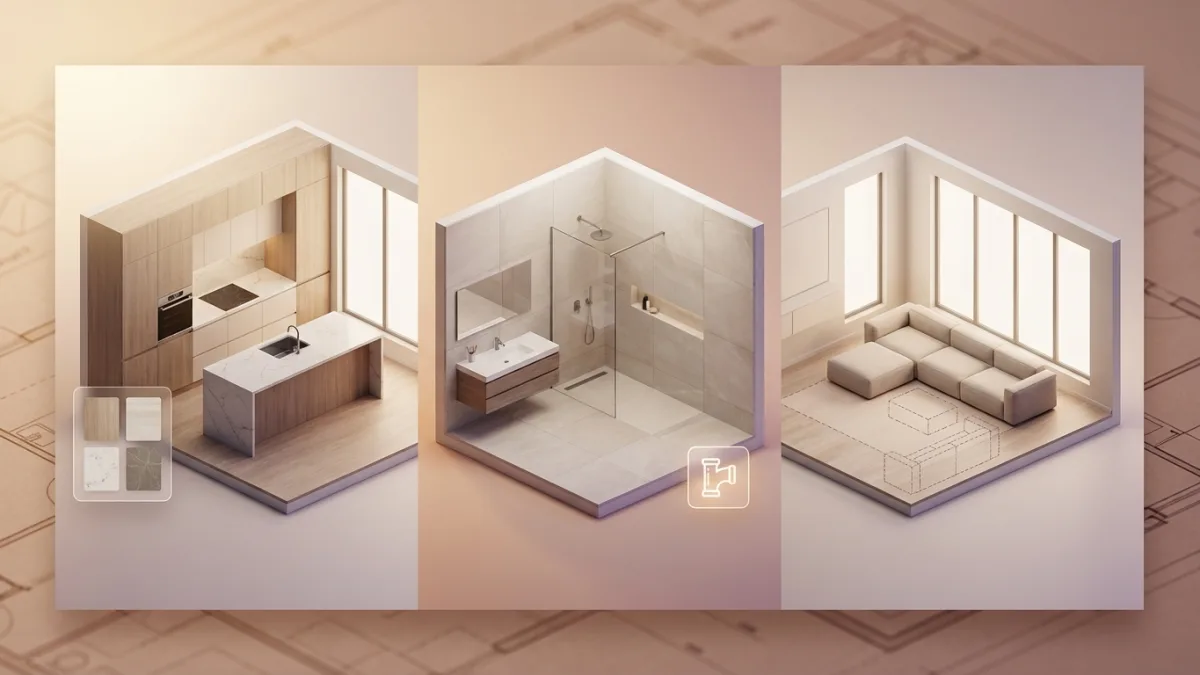
In Dubai’s climate and lifestyle context, certain renovations deliver particularly strong returns on investment and quality-of-life improvements.
Kitchen Renovation Essentials
Kitchens represent the most popular renovation area, combining functionality, aesthetics, and significant value addition.
According to Fixwell, Dubai kitchen renovations typically cost between AED 100 to AED 250 per square foot, with basic small kitchen renovations ranging from AED 2,500 to AED 6,000 and traditional kitchen refurbishing costing AED 5,000 to AED 12,000.
A well-executed kitchen renovation can recoup a significant portion of investment through increased property value.
Modern Dubai kitchens emphasize several key elements. Open layouts that connect to living areas reflect contemporary lifestyle preferences and maximize natural light.
High-quality cabinetry using moisture-resistant materials withstands Dubai’s humidity, with soft-close mechanisms and organized interior storage systems.
Durable countertops in quartz, granite, or engineered stone provide heat resistance and easy maintenance.
Premium appliances from brands like Bosch, Miele, or Sub-Zero add luxury appeal while offering energy efficiency.
Ventilation requires special attention in Dubai kitchens due to cooking styles and climate. Powerful range hoods effectively remove heat, smoke, and odors.
Proper ventilation prevents moisture accumulation that causes mold and material degradation.
Lighting design layers ambient, task, and accent lighting. Under-cabinet LED strips illuminate work surfaces, pendant lights define islands and dining areas, while recessed ceiling fixtures provide overall illumination.
Dimmable controls adjust ambiance for different occasions.
Storage optimization addresses Dubai’s limited kitchen space in many apartments. Pull-out pantries, corner carousel units, vertical dividers, and customized drawer organizers maximize every inch.
Dedicated appliance garages hide small appliances while maintaining counter clarity.
Bathroom Transformation Strategies
Bathroom renovations rank second in popularity, offering strong value returns and daily quality-of-life improvements.
According to Fajr Interiors, Dubai bathroom renovations typically range from AED 7,000 to AED 20,000 for labor, with materials adding AED 4,000 to AED 20,000 depending on brands chosen. DesignMaster reports that basic renovations of small to mid-sized bathrooms range from AED 11,000 to AED 30,000.
Waterproofing forms the foundation of successful bathroom renovation in Dubai’s humid climate. Professional waterproofing membranes applied to floors and walls prevent water damage, mold growth, and structural deterioration.
This critical step, though invisible in finished spaces, prevents catastrophic failures and expensive repairs.
Tile selection balances aesthetics with practicality. Large-format tiles (60x120cm or larger) create seamless modern looks with fewer grout lines, reducing maintenance and cleaning effort.
Porcelain tiles offer superior water resistance compared to ceramic alternatives. Non-slip ratings ensure safety in wet conditions.
Fixture quality significantly impacts longevity and user experience. Water-efficient fixtures reduce DEWA bills while meeting sustainability standards.
Brands like Grohe, Hansgrohe, and Kohler offer reliable performance with modern designs. Thermostatic shower systems prevent temperature fluctuations, while rain showerheads and body jets create spa-like experiences.
Ventilation systems prevent moisture-related problems. Properly sized exhaust fans remove humidity, preventing mold growth and protecting finishes.
Timer switches or humidity sensors automate fan operation.
Storage solutions address limited bathroom space common in Dubai apartments. Recessed wall niches in showers, floating vanities with organized drawers, mirrored medicine cabinets, and vertical shelving maximize functionality without cluttering spaces.
Living Space Modernization
Living areas—including majlis, family rooms, and entertainment spaces—benefit from renovations that enhance comfort, functionality, and aesthetic appeal. These spaces typically require careful planning and material selection.
Flooring upgrades transform living spaces dramatically. Porcelain tiles remain popular in Dubai for heat resistance, durability, and easy maintenance.
Large-format tiles create contemporary looks with minimal grout lines. Engineered wood flooring offers natural warmth while withstanding Dubai’s climate better than solid wood.
Luxury vinyl plank (LVP) provides cost-effective wood aesthetics with superior moisture resistance.
Wall treatments extend beyond paint. Accent walls using textured finishes, decorative panels, natural stone, or wallpaper create focal points.
Gypsum board features like recessed TV niches, floating shelves, and decorative molding add architectural interest. Soundproofing materials benefit apartments in high-density buildings.
Lighting transformation dramatically affects ambiance and functionality. Layered lighting combines recessed ceiling fixtures, cove lighting, floor lamps, and accent lights.
Smart lighting systems with app control and scene programming offer convenience and energy efficiency. LED technology reduces power consumption while providing superior color rendering.
Climate control optimization improves comfort and efficiency. Proper insulation, high-performance windows, and zoned AC systems reduce cooling costs—a significant concern in Dubai.
Smart thermostats learn usage patterns and optimize temperatures automatically.
Outdoor Space Enhancement
For villa owners, outdoor areas offer valuable renovation opportunities that extend living space and increase property appeal.
Dubai’s climate allows year-round outdoor enjoyment when spaces are properly designed.
Landscaping transforms bare yards into lush retreats. Drought-resistant plants, artificial turf, and efficient irrigation systems balance aesthetics with water conservation.
Shade structures like pergolas, sail shades, or retractable awnings make outdoor spaces usable during hot months.
Outdoor kitchens and entertainment areas add luxury appeal and functionality. Built-in grills, refrigeration, sinks, and dining areas create complete outdoor living environments.
Weather-resistant materials and proper ventilation ensure longevity.
Swimming pool renovations update aging pools with modern finishes, energy-efficient equipment, and smart controls. Pool resurfacing, tile replacement, and lighting upgrades refresh appearances while improving safety and functionality.
Majlis and seating areas provide traditional outdoor gathering spaces. Custom-built seating with weather-resistant cushions, decorative lighting, and privacy screening create intimate outdoor rooms for entertaining.
Choosing Materials and Finishes
Budget Contingency Required
Hidden problems like water damage, electrical violations, or structural weaknesses commonly emerge during renovation work
Material selection profoundly impacts renovation outcomes, affecting aesthetics, durability, maintenance requirements, and long-term costs.
In Dubai’s unique climate—characterized by extreme heat, high humidity, occasional sandstorms, and intense UV exposure—choosing appropriate materials becomes especially critical.
The right materials withstand environmental stresses while maintaining appearance and functionality for years.
Climate-Appropriate Material Selection
Dubai’s environment demands materials engineered for extreme conditions.
According to DCI Group, “The climate in Dubai is characterized by high temperatures (often above +45°C in summer), elevated humidity, frequent sandstorms, and sharp daily temperature fluctuations.” These factors require careful material selection to reduce wear and prevent structural degradation.
Heat resistance tops the priority list, as surface temperatures can exceed 50°C during summer months. Materials that warp, fade, or deteriorate under intense heat prove unsuitable regardless of aesthetic appeal.
Moisture resistance prevents mold, mildew, and structural damage. Despite Dubai’s desert location, coastal humidity (often 60-90% in summer) affects material performance.
Bathrooms, kitchens, and poorly ventilated spaces particularly require moisture-resistant materials.
UV stability preserves colors and prevents degradation. Dubai’s intense sunlight rapidly fades and weakens materials lacking UV protection.
Outdoor materials and those near windows need superior UV resistance.
Thermal expansion characteristics matter for large-format materials. Extreme temperature fluctuations cause expansion and contraction.
Materials and installation methods must accommodate movement without cracking or buckling.
Flooring Materials Comparison
| Material | Cost (AED/sqft) | Durability | Maintenance | Climate Suitability | Best Applications |
|---|---|---|---|---|---|
| Porcelain Tile | 25-100 | Excellent | Low | Excellent | Living areas, kitchens, bathrooms, outdoor |
| Marble | 80-300 | Good | High | Good (with sealing) | Formal spaces, luxury applications |
| Engineered Wood | 60-200 | Good | Medium | Good (with climate control) | Bedrooms, living rooms |
| Luxury Vinyl Plank | 30-80 | Very Good | Very Low | Excellent | All interior spaces, budget-friendly |
| Natural Stone | 70-250 | Excellent | Medium | Excellent | Outdoor areas, feature walls, bathrooms |
Porcelain tiles dominate Dubai renovations for valid reasons. Superior density makes them virtually impervious to moisture, while heat resistance prevents warping or discoloration.
Large-format options (up to 160x320cm) create seamless contemporary looks. Rectified edges allow minimal grout lines (2-3mm), enhancing modern aesthetics while simplifying cleaning.
Engineered wood flooring offers natural beauty with improved climate stability compared to solid wood.
According to Fitout House, engineered wood “consists of a thin hardwood veneer over a stable plywood core, making it much more dimensionally stable in the fluctuating humidity of a Dubai winter.”
However, engineered wood requires consistent climate control (AC maintained year-round) and performs poorly in high-moisture areas like bathrooms or outdoor spaces.
Luxury vinyl plank (LVP) has gained popularity as technology improves. Modern LVP convincingly mimics wood or stone while offering superior moisture resistance, easy installation, and budget-friendly pricing.
Commercial-grade LVP withstands heavy traffic and resists scratching, making it ideal for families with children or pets.
Wall Finishes and Treatments
Paint quality significantly affects longevity and appearance. Premium paints from brands like Jotun, Dulux, or Nippon contain higher pigment concentrations, better binders, and mold inhibitors.
These formulations resist fading, provide better coverage (reducing coats needed), and withstand cleaning without damage.
Low-VOC (Volatile Organic Compounds) paints improve indoor air quality—particularly important in Dubai’s tightly sealed, air-conditioned environments.
Wallpaper has evolved beyond traditional paper to include vinyl, fabric, and specialty materials. Modern wallpapers resist moisture, clean easily, and offer unlimited design possibilities.
Textured wallpapers add dimension without construction work. However, proper wall preparation and professional installation prove essential for quality results.
Decorative panels in wood, PVC, or composite materials create feature walls with minimal construction. 3D wall panels add architectural interest and can incorporate acoustic properties for noise reduction.
These solutions suit apartments where structural modifications face restrictions.
Natural stone cladding using marble, granite, or travertine creates luxury statements in feature walls, fireplace surrounds, or accent areas.
Stone requires professional installation and periodic sealing but delivers timeless elegance and durability.
Countertop and Surface Materials
Kitchen and bathroom countertops endure heavy use, requiring materials that combine aesthetics with performance.
Quartz engineered stone leads in popularity for good reason. Manufactured from 90-95% natural quartz combined with resins, these surfaces offer granite’s beauty with superior performance.
Non-porous composition prevents staining and bacterial growth without requiring sealing. Consistent patterns and colors simplify design coordination.
Heat resistance accommodates hot cookware (though trivets remain recommended). Brands like Caesarstone, Silestone, and Cambria offer extensive color selections.
Granite natural stone provides unique patterns and proven durability. Each slab offers distinct character impossible to replicate.
Properly sealed granite resists staining and heat while developing a patina over time. However, granite requires annual sealing, costs more than quartz, and shows seams more visibly in large installations.
Marble delivers unmatched luxury aesthetics but demands realistic maintenance expectations. Marble’s porous nature makes it susceptible to staining, etching from acidic substances, and scratching.
Regular sealing and careful maintenance preserve appearance. Marble suits decorative applications better than high-use work surfaces.
Solid surface materials like Corian offer seamless installations without visible joints. These acrylic-based materials allow integrated sinks, custom shapes, and easy repairs.
However, they lack the heat resistance of stone and can scratch more easily.
Fixture and Hardware Quality Considerations
Plumbing fixtures represent long-term investments where quality pays dividends. Premium faucets and showerheads from established brands feature ceramic disc cartridges that prevent leaking, brass or stainless steel construction resisting corrosion, and superior finishes maintaining appearance.
Water-efficient models reduce DEWA bills without sacrificing performance. Thermostatic shower valves prevent dangerous temperature fluctuations—especially important for households with children or elderly residents.
Door and cabinet hardware endures constant use requiring durable construction. Soft-close hinges and drawer slides prevent slamming, reduce noise, and extend cabinet life.
Stainless steel or brass hardware resists tarnishing in Dubai’s humid climate better than cheaper alternatives. Ergonomic designs improve usability for all family members.
Lighting fixtures balance aesthetics, functionality, and energy efficiency. LED technology has matured to offer excellent color rendering, dimming capabilities, and long lifespans.
Quality LED fixtures justify higher upfront costs through energy savings and reduced replacement needs. Smart lighting systems integrate with home automation for convenience and efficiency.
Investing in quality materials and fixtures typically costs more upfront but reduces maintenance costs significantly over time while maintaining better appearance and functionality.
Working with Renovation Professionals
Required Approvals
4 approvals- 1 Dubai Municipality permits for structural work
- 2 Building management NOCs for communities
- 3 DEWA approvals for electrical and plumbing
- 4 HOA compliance for community standards
The success of your renovation project heavily depends on the professionals you engage.
In Dubai’s diverse contractor market, selecting qualified, reliable partners requires careful evaluation and due diligence.
The right team transforms your vision into reality while navigating regulatory requirements, managing timelines, and delivering quality workmanship.

Types of Renovation Professionals
General contractors serve as project managers coordinating all renovation aspects. They hire and supervise specialized tradespeople, procure materials, manage schedules, handle permits, and serve as your primary point of contact.
General contractors prove most valuable for comprehensive renovations involving multiple trades and complex coordination.
Reputable contractors in Dubai maintain municipality licenses, insurance coverage, and portfolios demonstrating completed projects.
Interior designers focus on aesthetic and functional aspects of spaces. They develop design concepts, create detailed plans, specify materials and finishes, coordinate colors and styles, and ensure cohesive results.
Designers particularly benefit projects where you struggle to visualize outcomes or lack confidence in aesthetic decisions.
Many Dubai designers specialize in particular styles—contemporary, traditional Arabic, minimalist, or luxury—so selecting designers whose portfolios align with your preferences proves important.
Architects become necessary for structural modifications, additions, or projects requiring municipality approvals. Licensed architects prepare technical drawings, ensure code compliance, coordinate with engineers, and represent projects during approval processes.
Dubai Municipality requires architect involvement for structural changes, building envelope modifications, and significant layout alterations.
Specialized tradespeople including electricians, plumbers, carpenters, tilers, and painters execute specific work aspects. While general contractors typically manage these specialists, some homeowners prefer hiring trades directly for smaller projects.
This approach requires you to coordinate schedules, ensure quality, and manage multiple relationships—saving contractor markups but demanding more personal involvement.
Project managers provide oversight without performing actual construction. They monitor progress, verify quality, manage budgets, coordinate schedules, and protect your interests.
Independent project managers benefit clients lacking time for hands-on involvement or those undertaking first renovations without experience evaluating contractor performance.
Selecting the Right Contractor
Contractor selection deserves thorough research and evaluation. Poor contractor choices lead to substandard work, cost overruns, delays, and legal complications—problems far exceeding any savings from choosing low bidders.
Verification steps should include:
- License confirmation through Dubai Municipality or relevant authorities
- Insurance verification covering liability and worker compensation
- Portfolio review examining completed projects similar to yours
- Reference checks speaking with previous clients about experiences
- Financial stability assessment ensuring contractors can complete projects
- Specialization alignment matching contractor expertise to your project type
Red flags warranting caution include:
- Requests for large upfront payments (>30% before work begins)
- Reluctance to provide references or portfolio
- Absence of proper licensing or insurance
- Pressure tactics demanding immediate decisions
- Significantly lower quotes than competitors (often indicating shortcuts or hidden costs)
- Poor communication or unprofessional behavior during initial interactions
- Vague contract terms or resistance to detailed agreements
Understanding Contracts and Agreements
Comprehensive written contracts protect both parties and prevent misunderstandings. Never proceed with verbal agreements regardless of contractor reputation or relationship.
Essential contract elements include:
Detailed scope of work specifying exactly what contractors will perform, materials they’ll use, and standards they’ll meet. Vague descriptions like “kitchen renovation” invite disputes.
Specific language—”Install 15 linear meters of custom-built upper and lower cabinets in moisture-resistant MDF with soft-close hinges, quartz countertops in Caesarstone Calacatta Nuvo finish, and Grohe Minta kitchen faucet”—eliminates ambiguity.
Payment schedule tied to completion milestones rather than calendar dates. Typical structures include 30% deposit, 40% at 50% completion, 25% at substantial completion, and 5% retention released after final inspection and defect correction.
Avoid contractors demanding majority payment upfront.
Timeline specifications with start date, completion date, and milestone dates. Include provisions for delays beyond contractor control (permit delays, material shortages) versus delays from contractor performance issues.
Change order procedures establishing how modifications are requested, approved, priced, and documented. Renovation projects commonly encounter unforeseen conditions or client-requested changes.
Clear change order processes prevent disputes about additional costs.
Warranty terms covering workmanship and materials. Reputable contractors typically warranty labor for 1-2 years, while material warranties depend on manufacturer terms.
Specify warranty duration, coverage scope, and claim procedures.
Permit and approval responsibilities clarifying who obtains necessary approvals and pays associated fees. Typically contractors handle permits, but contracts should explicitly state this.
Insurance and liability confirming contractor maintains adequate coverage and assumes responsibility for worker injuries or property damage during construction.
Dispute resolution procedures if disagreements arise. Mediation clauses often resolve issues faster and cheaper than litigation.
Managing the Renovation Process
Active involvement during renovation ensures results match expectations and problems receive prompt attention.
Regular communication through scheduled progress meetings (weekly for major projects) keeps everyone aligned. Discuss completed work, upcoming tasks, any issues requiring decisions, and timeline adherence.
Document discussions in writing to maintain clear records.
Progress inspections verify quality at each phase before subsequent work conceals it. Inspect waterproofing before tiling, electrical rough-in before drywall, and framing before finishes.
Addressing issues early prevents costly corrections later.
Payment discipline ties disbursements to verified completion milestones. Inspect work thoroughly before releasing payments.
Withhold final payment until all punch list items are corrected and final inspections passed.
Change management requires discipline. Renovation projects tempt frequent changes as you see spaces taking shape.
However, changes increase costs and delay completion. Evaluate changes carefully, obtain written quotes before approving, and understand timeline impacts.
Documentation through photos, receipts, contracts, change orders, permits, and communications creates valuable records. Documentation helps resolve disputes, supports warranty claims, and provides future reference for maintenance or additional work.
Cost Management and Budgeting Strategies
Dubai Climate Challenge
High temperatures often above +45°C in summer, elevated humidity, frequent sandstorms, and sharp daily temperature fluctuations require specialized materials to reduce wear and
DCI Group, Dubai Climate StudyFinancial management determines whether renovations deliver satisfying results or create stressful experiences marked by cost overruns and compromises.
Understanding cost drivers, implementing strategic budgeting, and maintaining financial discipline throughout projects enables you to achieve desired outcomes within realistic budgets.
Breaking Down Renovation Costs
Material costs typically represent 40-50% of total renovation budgets. This category includes all physical components: flooring, tiles, fixtures, cabinetry, countertops, appliances, paint, lighting, hardware, and finishing materials.
Material quality varies enormously, creating corresponding price ranges. Basic builder-grade materials cost significantly less than premium alternatives but may require replacement sooner and deliver less aesthetic appeal.
Material selection offers the most flexible budget adjustment opportunity. Choosing mid-range materials over luxury options can reduce overall costs substantially while still delivering quality results.
However, certain materials warrant premium investment: waterproofing, structural components, and items affecting safety or longevity should prioritize quality over savings.
Labor costs consume 30-40% of budgets and vary based on trade specialty, contractor reputation, and project complexity. Skilled trades command premium rates but deliver superior results requiring fewer corrections.
In Dubai’s market, experienced contractors typically charge competitive rates for general work, while specialized trades (electrical, plumbing, custom carpentry) may command higher hourly rates.
Labor represents challenging savings territory. Selecting contractors solely on lowest bids frequently results in substandard work requiring expensive corrections.
However, obtaining multiple detailed quotes helps identify reasonable market rates versus inflated pricing.
Professional fees for designers, architects, and project managers add 10-15% to budgets but provide valuable expertise. Interior designers typically charge based on project scope or hourly rates.
Architects fees vary based on construction costs depending on project complexity. These professionals often save more than their fees through design optimization, material selection guidance, and mistake prevention.
Permits and approvals vary by project scope. Dubai Municipality permits for structural work and building management NOCs have associated costs that should be factored into budgets.
Contingency reserves of 10-20% address inevitable surprises. Hidden water damage, electrical code violations, structural issues, or unforeseen complications commonly emerge during renovation.
Adequate contingency prevents project stoppages or forced compromises when issues arise.
Cost-Saving Strategies That Work
Phased implementation spreads costs over time while allowing you to occupy renovated spaces sooner. Prioritize high-impact areas (kitchens, bathrooms, main living spaces) in initial phases, deferring secondary spaces (guest rooms, storage areas, outdoor features) to later phases.
This approach also allows learning from initial phases to refine subsequent work.
Strategic splurges and savings optimize budget allocation. Invest premium amounts in highly visible elements and frequently used features while economizing on hidden components and rarely used spaces.
For example, premium kitchen cabinetry and countertops deliver daily enjoyment and strong resale value, while guest bathroom fixtures can use mid-range options without significantly impacting overall results.
Material alternatives provide similar aesthetics at lower costs. Quartz countertops offer granite’s appearance at lower cost with superior performance.
Luxury vinyl plank convincingly mimics hardwood at fraction of the price. Porcelain tiles replicate marble, concrete, or wood appearances while offering better durability and easier maintenance.
Retain existing layouts when possible to avoid costly plumbing and electrical relocations. Moving kitchens or bathrooms requires rerouting supply lines, drain lines, and electrical circuits—expensive work that consumes budget without visible results.
Working within existing footprints focuses spending on aesthetic and functional improvements.
DIY appropriate tasks can reduce labor costs if you possess relevant skills and time. Painting, simple demolition, fixture installation, and finishing touches suit capable homeowners.
However, recognize your limitations—electrical work, plumbing, tiling, and structural modifications require professional expertise for safety, code compliance, and quality results.
Material procurement flexibility allows cost optimization. Contractors typically mark up materials for procurement convenience and profit.
Some contractors allow client-supplied materials for certain items (fixtures, appliances, specialty tiles) enabling you to shop sales and compare prices.
However, this approach requires careful coordination and may affect warranty coverage.
Common Budget Pitfalls to Avoid
Unrealistic initial budgets create inevitable disappointment. Research realistic costs for your desired scope before committing to projects.
Hoping to complete comprehensive villa renovations for apartment renovation budgets leads to compromises, shortcuts, or abandoned projects.
Scope creep gradually expands projects beyond original plans. “While we’re at it” thinking adds features, upgrades materials, or extends work areas—each individually justifiable but collectively devastating to budgets.
Maintain discipline by evaluating additions against overall priorities and budget constraints.
Hidden cost ignorance focuses only on obvious expenses while overlooking associated costs. Renovations generate waste requiring disposal fees, may necessitate temporary housing during extensive work, require furniture storage, and create utility costs during construction.
These secondary expenses can add significantly to project costs.
Inadequate contingency forces difficult choices when problems emerge. Discovering water damage, mold, or structural issues mid-project without contingency funds means either compromising quality elsewhere or abandoning work incomplete.
Always maintain 10-20% contingency for unexpected issues.
Payment front-loading puts you at disadvantage if contractor performance issues arise. Paying majority of costs before majority of work completes removes your leverage to ensure quality completion.
Tie payments to verified milestone completion maintaining retention until all punch list items are corrected.
Financing Your Renovation
Personal savings represent the most straightforward financing, avoiding interest costs and approval processes. However, depleting emergency funds for renovations creates financial vulnerability if unexpected expenses arise.
Home equity loans or lines of credit leverage property value to fund improvements at relatively low interest rates. These products suit homeowners with substantial equity and stable income.
However, they require property as collateral and involve approval processes considering credit history and income verification.
Personal loans provide unsecured financing without risking property but typically carry higher interest rates. These suit smaller renovations or borrowers lacking substantial home equity.
Credit cards might finance minor renovations if you can repay quickly, potentially earning rewards points. However, high interest rates make cards unsuitable for large projects or extended repayment periods.
Contractor financing offered by some renovation companies provides convenient approval but warrants careful evaluation. Compare terms, interest rates, and total costs against alternative financing sources.
Some contractor financing programs charge premium rates that significantly increase total project costs.
Frequently Asked Questions
Kitchen remodels consistently rank as the most expensive single-room renovation. According to Kitchen Cabinet Kings, a minor kitchen remodel delivers 113% ROI nationally, while HonestCasa reports mid-range major kitchen remodels averaging $79,982 in 2026. Kitchens combine high-cost appliances, extensive cabinetry, countertops, flooring, lighting, plumbing, and electrical work all in one space. Whole house renovation costs $15 to $60 per square foot on average, with roof replacement also ranking among the most expensive exterior renovations at average costs of $9,425 nationally.
Refurbishment focuses on improving aesthetics while renovation changes the entire structure of a building. Refurbishment implies a process of improvement by cleaning, decorating, and re-equipping, whereas renovation refers to the process of returning something to a good state of repair. While a renovation may include repairs, it focuses on refreshing and renewing a building or room with updates and replacements.
According to Amerisave, the average home renovation costs about $22,000, though the price varies by project, location, and other factors. Whole House Fan reports current renovation costs in 2026 range from $19,500 to $88,400 for most homeowners tackling whole house projects, with the average landing around $52,275 for homes between 1,250 and 1,600 square feet. Whole house renovation costs $15 to $60 per square foot on average.
According to Angi, construction managers typically charge 5% to 15% of the value of the project for projects valued at less than $1 million (most residential builds). Aquila Commercial notes that for renovation projects, manager fees range from 5% to 15% of the total cost, depending on the scope and complexity of the job. Reputable project management firms typically charge 3% to 5% for office renovations and tenant improvement (TI) projects.
According to Haas Door and Garage.com, garage door replacement returns a whopping 268% of the investment cost for a homeowner, the #1 highest recoup value of more than 28 home improvement projects according to the 2025 Cost Versus Value Study. Minor kitchen remodels deliver 113% ROI nationally. A mid-range bathroom remodel recouped 73.7% of its cost in recent data. Most remodeling projects have a 50% to 85% return on investment, with exterior improvements typically outperforming interior renovations.
According to 3D Home Improvements, the average time to complete a whole-home renovation is 6-12 months. Hogan Design notes that typically, you can expect a whole house remodeling project to last anywhere from 16 weeks (4 months) to 24 weeks (6 months). A small bathroom renovation might take 3 weeks, while a whole house renovation can take 6 months or more. Timeline depends on the scope of the project, permit approvals, availability of materials, and whether structural modifications are involved.
Add at least 10% to 20% to your budget for contingencies, emergencies, and unexpected expenses. This will help cover the cost of making repairs or changes to your plan that you weren’t counting on but which inevitably crop up. Budget an extra 15% to 25% contingency for older homes to cover issues you can’t see until walls open up. Proper contingency planning prevents financial stress during your renovation project.